

After seven years of silence, Gruesome returns with Silent Echoes—an album both fiercely nostalgic and boldly progressive. We sat down with vocalist/guitarist Matt Harvey to unpack the years-long journey behind the new record, its emotional weight, and the band’s evolving identity
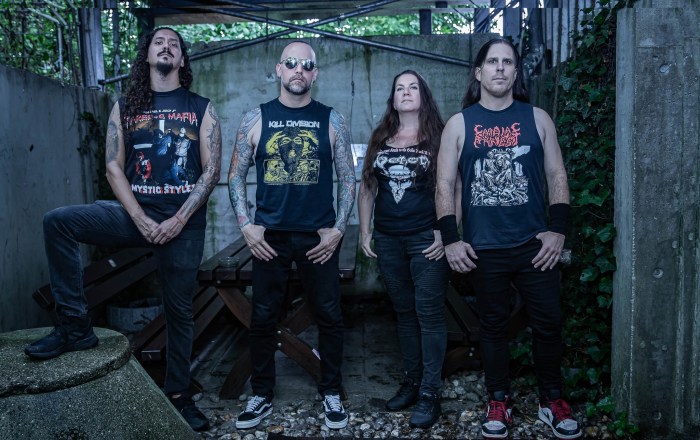
📸: Ervin Novak
Silent Echoes is your first full-length album in seven years. What musical or personal changes took place during that time that shaped the direction of this new record?
Yeah, good question. I mean, with Gruesome—at the end of the day—it’s a tribute to Death, so we kind of always had a clear direction. With the last album, Twisted Prayers, we were leaning into the Spiritual Healing era, so it felt pretty clear where we’d go next. But, since Twisted Prayers, a lot has happened.
We’ve done two Exhumed records, Dan did a Possessed album, I released a couple of records with Pounder, Left to Die became a thing, and of course, there was a global pandemic. We were also supposed to work with Sean Reinert—who played on Human—as the producer. Tragically, he passed away. All of that really affected our ability to get this record off the ground. We started working on it at least three different times, but something always came up. So yeah, it took a long time, and honestly, it felt even longer. But hey, the record is finally done, and we’re really stoked about it.
You’ve described Silent Echoes as a progression from your earlier work, with more complexity in the musicianship. How did you balance honoring old-school death metal roots with this more progressive direction?
Yeah, you know, when you talk to Death fans, there are usually three types: those who love everything, those who only like the early stuff, and those who only like the later albums. I think Human kind of sits in that sweet spot where all those groups overlap. I remember hearing it as a kid and thinking, “Wow, this is super technical—is it still brutal enough?” But over time, it’s clearly stood the test as a death metal record with more depth.
For us, Human set a really high bar. Gus, Dan, and I have always been the core songwriting team, and this time it became more of a true group effort. We each brought something to the table: Dan is focused on technicality and originality, Gus is thinking about what the fans will connect with—whether it’s catchy or memorable—and I’m always checking if it’s still heavy and brutal. So, when all three of us are happy with something, we know we’ve landed in the right place. That dynamic really helped us balance the technical and progressive elements with our old-school roots.
The title track gives listeners a preview of this new era for Gruesome. Can you walk us through the writing process for that song and how it represents the full album?
The title track has a little bit of everything—heavier riffs, more technical parts, and those meat-and-potatoes death metal sections. That song really captures the mix of ambition and homage across the album. Our process usually starts with me putting together a rough demo. Then Dan and Gus take it apart, add cool stuff, maybe strip some things away, and we rebuild it together.
This time was different though—we actually finished most of the songs in a jam room together. That’s never happened before since I’m in California and the others are in Florida. We practiced for four days straight—six hours a day—breaking only for lunch and beers. That process of working things out in person made a huge difference, especially since the musicianship is more demanding this time around.
Silent Echoes is a tribute to Sean Reinert, who was originally meant to produce the album. How did his legacy shape the final sound and spirit of the record?
Yeah, that was a big one. We’re fortunate that this is a Death tribute band with direct connections to the source—Gus and I play with Rick Rozz and Terry Butler, so we can get firsthand insight into that era. Plus, Sean was Gus’s drum teacher and friend. They toured together, hung out, and were really close. I knew Sean too, but not on that level.
So for Gus, it wasn’t just about honoring a legendary drummer—it was about honoring a friend. That added an emotional weight to the project. Gus really pushed himself to write and perform drum parts that lived up to Sean’s legacy, especially what he did on Human, which was absolutely game-changing. After Sean passed, we didn’t talk about the album for almost a year. It was too heavy. But his presence looms large over every aspect of this record.
You’ve mentioned that there’s less “winking at the audience” this time. What does that shift mean for the band’s identity going forward?
Early on, it was easy to drop little musical Easter eggs—riffs or moments that directly called back to Death songs like “Zombie Ritual” or “Pull the Plug.” I learned those riffs when I was 13 or 14, and they’re baked into my DNA as a guitarist.
But by the Human era, Death had become more technical, and I wasn’t learning their songs as much because I was focused on starting Exhumed. So, I didn’t have that same vocabulary to pull from as easily. I think that’s a good thing—it makes the references less heavy-handed. There’s still homage, but it’s not so on-the-nose. It’s more about capturing the spirit than copying the form. And that fits the more ambitious tone of this record.
What challenges did you face trying to channel such a seminal album like Human while also forging your own identity?
For me, it wasn’t about putting my identity into it. I approach it like method acting—trying to inhabit someone else’s artistic voice. The real challenge was matching the level of musicianship.
Gus studied under Sean, and he’s a super technical player—even if that’s not his go-to style. And Dan is also extremely capable, even if people associate him more with traditional death metal. For me, though, it was definitely more of a stretch. I’ve always been more focused on catchy, brutal stuff—not so much on complex technicality. But I took it as a personal challenge. We’ve done the early Death sound; now it’s time to level up.
You worked again with producer Jarrett Pritchard and even used Sean Reinert’s snare drum from Focus. How did those production choices help shape the album’s emotional and sonic depth?
Yeah, I definitely didn’t expect production to become as important as it has. With a band like Gruesome, where each album pays tribute to a specific era, production is crucial. Death’s albums all sound completely different—Leprosy doesn’t sound like Human, which doesn’t sound like Symbolic. So, if we want to honor those eras, the production has to match.
Jarrett has worked on all our albums, and starting with Twisted Prayers, he even began checking in with Scott Burns to get technical details—like what mics were used, what compressors, and so on. That level of care really matters. This time, we made sure we had the budget and the time so we weren’t rushed. We wanted every detail to be right, and Jarrett delivered.
Looking beyond Silent Echoes, how do you see Gruesome evolving? Is this progressive approach the new standard or just one chapter in the band’s journey?
I think it’s both. If we’re following Death’s trajectory, Individual Thought Patterns is next—and that’s just as ambitious as Human. So we’ve got our work cut out for us.
The first few albums felt comfortable to me—like slipping into a warm bath. But Silent Echoes was more like taking on a fitness challenge. And I think that challenge is part of the fun. It also reflects the restless spirit of Death’s catalog—each record pushed forward, and even now, that legacy still pushes us to evolve. It’s an honor and a challenge we’re excited to take on.
Thanks so much for your time, Matt. Always a pleasure. We look forward to seeing you on the road.
Absolutely. I’m sure I’ll see you in Sacramento sooner than later!
Catch Gruesome on tour and stream Silent Echoes wherever you get your music. Pre-order here.
Categories: gruesome, Interviews
 Capital Chaos TV
Leave a comment