

In the years since their harrowing debut Across Deaths, Dublin’s Malthusian have returned with The Summoning Bell — a leaner, more visceral beast that still drips with existential dread and chaos. We spoke with guitarist and primary songwriter Matt Bree about the band’s evolution, sonic philosophies, and why punishing music remains their unshakable compass.
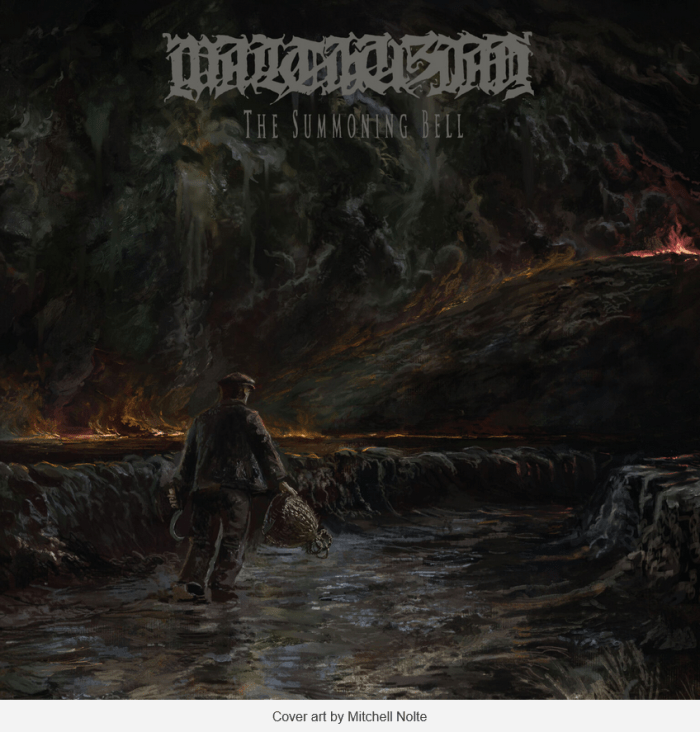
The Summoning Bell” seems to be your most visceral and streamlined work to date. How did the departure from the denser, more cavernous textures of Across Deaths affect your songwriting and overall approach in the studio this time around?
Malthusian guitarist Matt Bree: The production of AD was not something that we were aiming for but we had to mix the album twice and that whole debacle was a frustrating experience. We obviously signed off on it at the time but in hindsight it wasn’t something that brought the best out of the tunes. That said, it stands as a monument to that period of the band. TSB is an intentionally more streamlined work and much changed in the 7 years since AD was recorded and the recording of this last year. One of the things being that I have become the primary songwriter rather than the more collaborative effort of AD. Each of our releases have been somewhat different to the last and this is no exception. The journey continues.
You’ve described a kind of spiritual synchronicity in how Malthusian came together and evolved — do you believe that same energy is still at work now with the new lineup and Relapse partnership?
Myself and JK started the band and set our intention from our first jam, and from our first tune written, Wraith///Plague Spore. To that extent, nothing has changed. We are still at the core of the band. TMK has been in the band for more than half of its existence, as well as filling in on live duties for a stint in 2015, so he knows it inside out and FB’s contribution came out even better than planned. The album was all but written and the overall vision was in place when we signed with Relapse so that had no effect on the end result. They had been in contact about signing us before our first release in 2013 so with that we feel there was an understanding as to the type of music we would present. It will always be punishing and unhinged music.
There’s a strong philosophical thread woven through The Summoning Bell, from Samuel Beckett references to ruminations on “true nothingness.” Is there a particular worldview or set of ideas guiding the album’s lyrical direction?
It’s a culmination of some of my worldviews, of which there are many, and written in a style that is consistent with the overall feeling and themes of the album. I don’t care to go into too much detail about the lyrics. I feel they are quite direct and they can also be left open to the interpretation of the reader. Free feel to find whatever you want in them. Writing about Satan, blood and guts or fantasy are not subjects that interest me and there is enough of that style out there already to appease anyone looking for it. Although I am a fan of religious iconography. Lyrically, I find it easier and more fulfilling to write about existential dread and the unknowing. Something that is prevalent in Beckett’s work that I find very thought provoking as well as in many other sources of inspiration. Existence is constant repetition.
After the draining process of recording Across Deaths, how did you guard against burnout while crafting this new album — especially with the added pressure of a new label and renewed expectations?
The writing of AD wasn’t a draining process, I rarely find writing to be such, it was the mixing that was an arduous task. As I mentioned above, the album was done, with the exception of Dens and Ruins, by the time we got to the negotiations stage with Relapse so that wasn’t a factor either. We were in a position that no outside influences or pressures were at play so with that had free reign to do as we wished and that, in and of itself, can be a good situation to be in.
Much of Malthusian’s early traction came from being one of the few Irish bands pushing the tempo envelope. Now that the scene is broader and more diverse, where do you see Malthusian fitting into today’s extreme metal landscape?
It’s not something I think about. We’ve always done what we wanted to a certain degree and to varying results but we’ve held our own and will continue to do so. We established ourselves as a force early on and this album should only work to reaffirm that position. These days as a listener, music, both old and new, is readily available at the press of a button, as well as a total oversaturation of new bands which shows no signs of slowing but that just makes a new find all the more rewarding. Where we fit into that landscape is out of our hands.
You’ve mentioned “setting intention” and having things manifest from that process. Can you talk about a moment during this record’s creation where that philosophy paid off in a way that surprised you?
That’s a good question but not something I wish to discuss to any great detail. I will say that nothing surprised me though.
The guitar tones on The Summoning Bell are absolutely feral but surprisingly articulate — what gear (amps, pedals, tunings, etc.) did you rely on to carve out that level of clarity in the chaos?
We play in B and the album was recorded through a mixture of Engl and Peavey amps with a Fender Twin Reverb drafted in for Isolation, Onset and Chaos. Effects were minimal with the usual mix of delay and reverb while the wah was cracked out for some of the lead work. FB is endorsed by Dark Glass and utilized a selection of tones and effects from that wild piece of kit.
Ozzy Osbourne’s passing marks the end of an era — as a band rooted in both extremity and tradition, what did Ozzy and Black Sabbath mean to you personally, and did they influence Malthusian in any direct or indirect ways?
Sabbath invented the genre so we’re forever indebted to them. They’ve been a constant throughout all of our lives and continue to deliver anytime they’re put on, 55 years later. More specifically, given doom has been a style that we have embraced since the inception of the band, the influence is direct and immeasurable. 3/4 of the original line up played in doom bands. Personally, I’ve never been overly taken with Ozzy’s solo stuff bar a few of the hits. A revisit of the first 2 is due.
If you had to summon a demon using only one item from a Dublin pub and one from a band member’s gear bag, what would they be — and what would the demon be called?
Whiskey from the pub, whiskey from the gear bag and the demon is called The Devil.
The Summoning Bell is out now via Relapse Records. Whether you’re drawn by sheer sonic brutality or existential unease, this is music that doesn’t just demand attention — it consumes it.
#Malthusian #TheSummoningBell #capitalchaostv #AcrossDeaths #MattBree #IrishDeathMetal #IrishBlackMetal #RelapseRecords #ExtremeMetal #DoomMetal #MetalInterview #BlackenedDeathMetal #ExistentialMetal #MetalBlog #UndergroundMetal #DublinMetal #MetalPhilosophy #MetalLyrics #BTuning #ModernDeathMetal #SamuelBeckettMetal
Categories: Interviews, Malthusian, Music
 Capital Chaos TV
Leave a comment